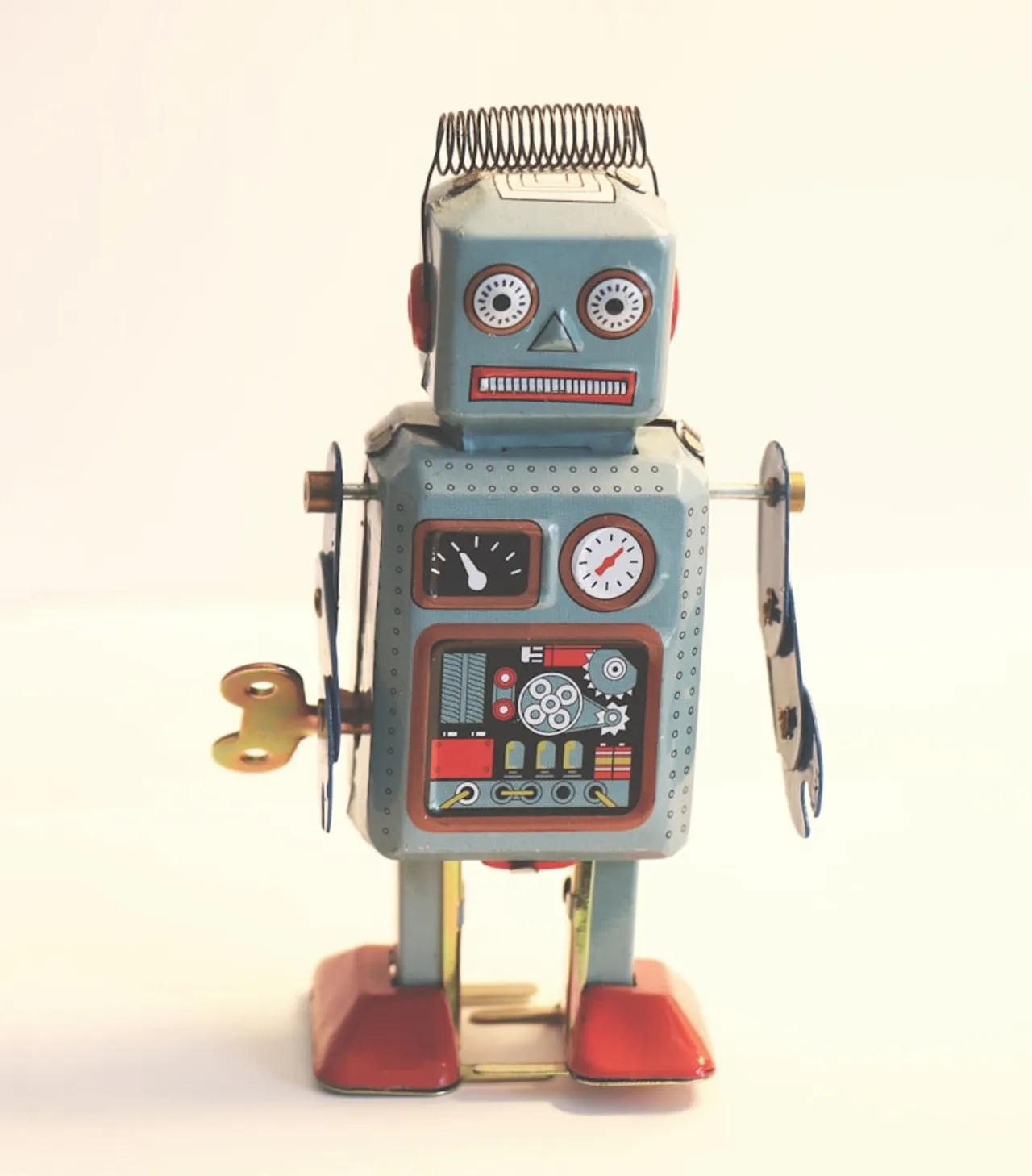
In a Tesla factory in Fremont, California, a humanoid robot named Optimus picks up a battery cell, inspects it with camera eyes, and places it precisely into position on an assembly line. Across the Pacific, in a BYD factory in Shenzhen, a robot built by Unitree does something similar. In a Boston Dynamics lab, Atlas does a backflip and then carefully sorts packages. In a Figure AI warehouse in San Jose, a humanoid robot makes coffee while carrying on a conversation about what it's doing.
Eighteen months ago, humanoid robots were demos and dreams. Now they're showing up at work.
Why Humanoid, Why Now
The world is full of robots, but they're almost all specialized machines: robotic arms bolted to factory floors, warehouse bots that roll along fixed paths, drones that fly preset routes. They're enormously productive, but they can only operate in environments designed for them.
Humanoid robots promise something different: a machine that can operate in environments designed for humans. Stairs, doors, desks, tools, vehicles — the entire built world is sized and shaped for the human body. A humanoid robot doesn't need the environment to change. It adapts to what already exists.
The timing is driven by three converging breakthroughs:
- AI foundation models that give robots general-purpose reasoning, not just pre-programmed routines
- Massive improvements in actuators and batteries that make sustained bipedal locomotion practical
- Computer vision that lets robots perceive and manipulate objects in unstructured environments
The Players
Tesla's Optimus has the advantage of Elon Musk's manufacturing expertise and billions in capital. Tesla's pitch is mass production — making humanoid robots cheap enough to sell for $20,000-$30,000, like a car.
Figure AI raised over $2.6 billion and partnered with OpenAI to give its Figure 02 robot conversational intelligence. The demo where it explained its reasoning while making coffee was a genuine milestone in human-robot interaction.
Boston Dynamics has decades of locomotion expertise. Their new electric Atlas (replacing the hydraulic version) is the most physically capable humanoid robot in existence.
Chinese companies are moving fast. Unitree's G1 robot sells for under $16,000. UBTECH, Fourier Intelligence, and Xiaomi's CyberOne are all in active development. China's strategy mirrors its approach to EVs: compete on price and speed of iteration.
Agility Robotics' Digit is already deployed in Amazon warehouses, handling tote bins — one of the first commercial deployments of a humanoid robot at scale.
The AI Brain Problem
Building a body that walks is hard. Building a brain that knows what to do with it is harder. The current approach borrows from language models: train robots on massive datasets of demonstrations — both real and simulated — and let them generalize to new situations.
Google DeepMind, NVIDIA, and several startups are building "foundation models for robotics" — general-purpose AI that can control any robot body for any task, similar to how GPT-4 can handle any text task. The field calls this vision Embodied AI, and it's attracting talent and funding at a pace that suggests investors believe it will work.
The $17 Trillion Question
Goldman Sachs estimates the humanoid robot market could reach $38 billion by 2035, with some bullish analysts projecting trillions in economic impact if robots can truly substitute for human labor at scale. The potential is massive: elder care, construction, agriculture, disaster response, space exploration — any job that's dangerous, repetitive, or physically demanding.
But "potential" and "reality" are separated by an ocean of unsolved problems: reliability, safety, regulation, public acceptance, and the sheer complexity of getting a two-legged machine to work eight hours without falling over or breaking something.
The race is on. The finish line is further than the hype suggests, but closer than the skeptics think.