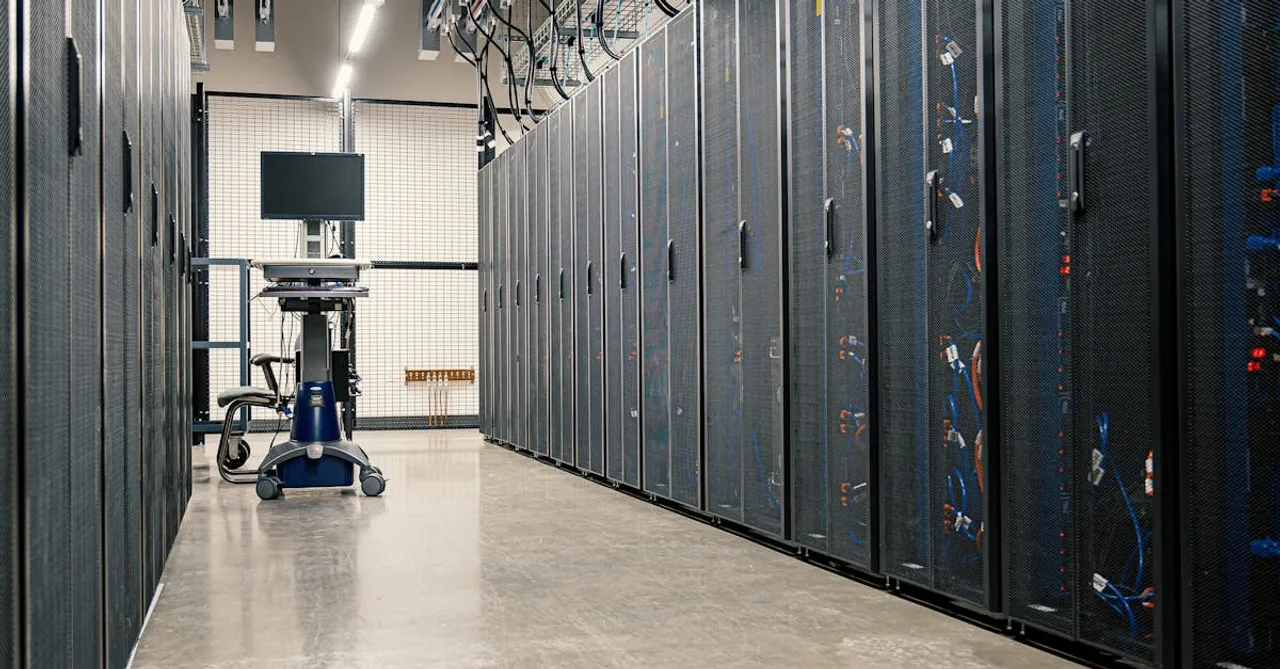
In early 2026, Microsoft signed a $650 million power purchase agreement with Three Mile Island to reactivate a nuclear plant. Amazon secured three new data center sites dependent on renewable energy availability. Google announced plans to build 10 new AI data centers globally. These aren’t individual business decisions—they’re symptoms of a structural crisis: AI infrastructure is consuming electricity at rates that existing grids cannot support.
The Scale of the Problem
Training ChatGPT consumed an estimated 1,287 MWh—equivalent to the annual electricity consumption of 130 American households. Inference—running trained models—consumes even more at scale. A single query to a large language model uses roughly as much electricity as a Google search. With billions of queries daily, the cumulative power draw rivals entire countries.
The International Energy Agency estimates that AI data centers could consume as much electricity as all of Japan by 2030 if current deployment rates continue. This is not hyperbole. It’s baseline projection assuming no acceleration.
Why This Is Becoming Impossible to Ignore
Power grids in developed countries are already stressed. Texas experienced rolling blackouts in 2024 partially attributed to data center demand. Ireland risks power shortages if new data center builds continue at planned rates. A single large AI data center can consume 1 gigawatt of continuous power—equivalent to a major city.
Real estate is equally constrained. Data centers require not just land but specific proximity to power sources, cooling water, fiber optic infrastructure, and grid capacity. The best locations are already taken. New data centers are going to less optimal locations, increasing power and cooling requirements.
The Nuclear Renaissance
Big Tech’s pivot toward nuclear power is not driven by ideology but by necessity. Nuclear provides reliable, clean baseload power that scales. Microsoft, Google, and Amazon have all signed agreements to build or reactivate nuclear facilities. Small modular reactors (SMRs)—factory-built nuclear units that can be deployed at data center sites—are attracting billions in venture capital.
However, nuclear takes 5-10 years to build. Data centers need power now. This time lag is creating a supply crunch that will persist through the late 2020s.
The Efficiency Imperative
Model architecture is becoming power-conscious by necessity. Researchers are optimizing for energy efficiency, not just accuracy. Sparse models that activate only relevant parameters, quantization that reduces computation precision, and novel architectures like state space models that require less compute are moving from research curiosity to production necessity.
This shift aligns with earlier challenges: small models, efficient inference, and architectural diversity suddenly aren’t niche optimizations—they’re industry imperatives.
What This Means for AI Viability
If energy becomes the binding constraint on AI deployment, the implications ripple through everything we’ve discussed. Scaling to arbitrarily large models becomes economically impossible. Inference costs rise. Companies with reliable power sources gain massive competitive advantages. Nations with nuclear capacity become AI centers. The energy costs of AI start determining the boundaries of what’s commercially viable.
For practitioners, this means efficiency—model efficiency, inference efficiency, deployment efficiency—moves from optional optimization to core design requirement. The AI gold rush is running into physical limits sooner than anyone anticipated.