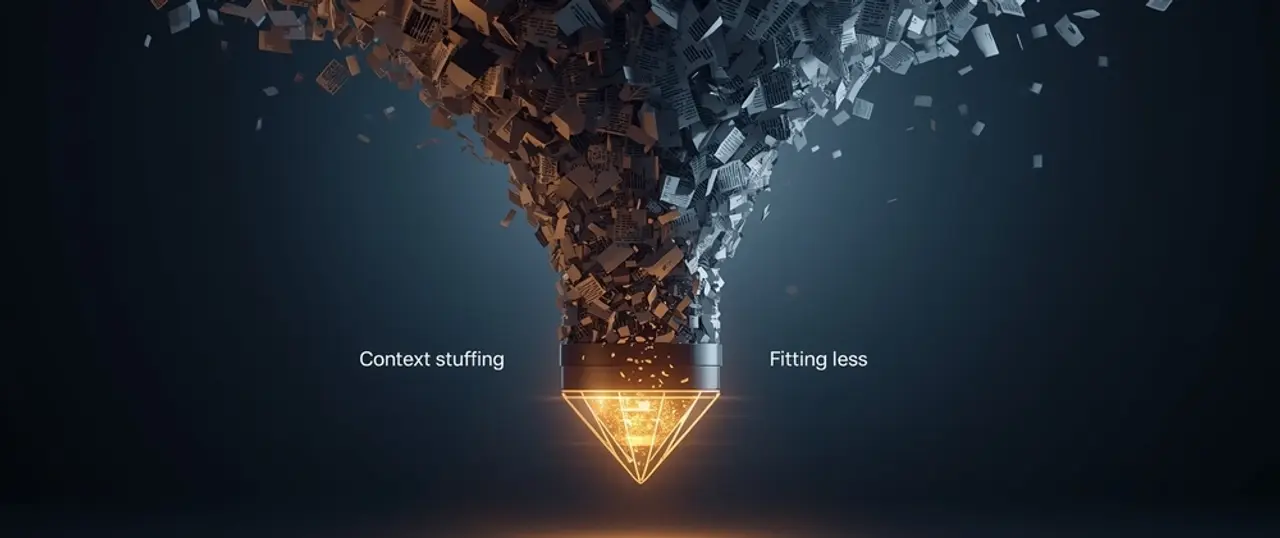
One of the most discussed limitations of large language models is context window size—how much text a model can consider when generating a response. GPT-4 has a 128K token context window. Claude 3.5 has 200K tokens. Yet ironically, larger context windows often don't translate to proportionally better performance. By 2026, researchers understand why, and it's reshaping how we think about LLM architecture.
The Attention Problem
The transformer architecture that powers modern LLMs uses attention mechanisms that have quadratic computational complexity with respect to context length. A 200K context window requires 40 billion attention operations. This makes processing long contexts expensive and practically limits how much context is truly useful.
More fundamentally, information in long contexts gets lost. If a document is 200K tokens long, information from the first 50K tokens has negligible influence on predictions about the last 50K tokens—the model effectively 'forgets' distant context. This is a problem that larger context windows don't solve; it's a deeper architectural challenge.
Lost in the Middle
Researchers discovered that when given documents of 10,000+ tokens, LLMs perform worst when retrieving information from the middle of the document—they perform better with information at the beginning and end. This 'lost in the middle' effect is independent of context window size and reflects the model's attention distribution.
Practical Implications
For applications using large context windows, this means most of the window is wasted. An LLM given a 200K token conversation to continue only meaningfully uses the most recent 50K tokens. For applications that need to reference large amounts of information, the solution is retrieval-augmented generation (retrieving relevant context rather than providing all context).
Leading AI product teams in 2026 optimize for smart context management rather than maximum context size: caching frequently-referenced context, retrieving specifically relevant sections of large documents, and summarizing less-relevant information rather than throwing it all at the model raw.